
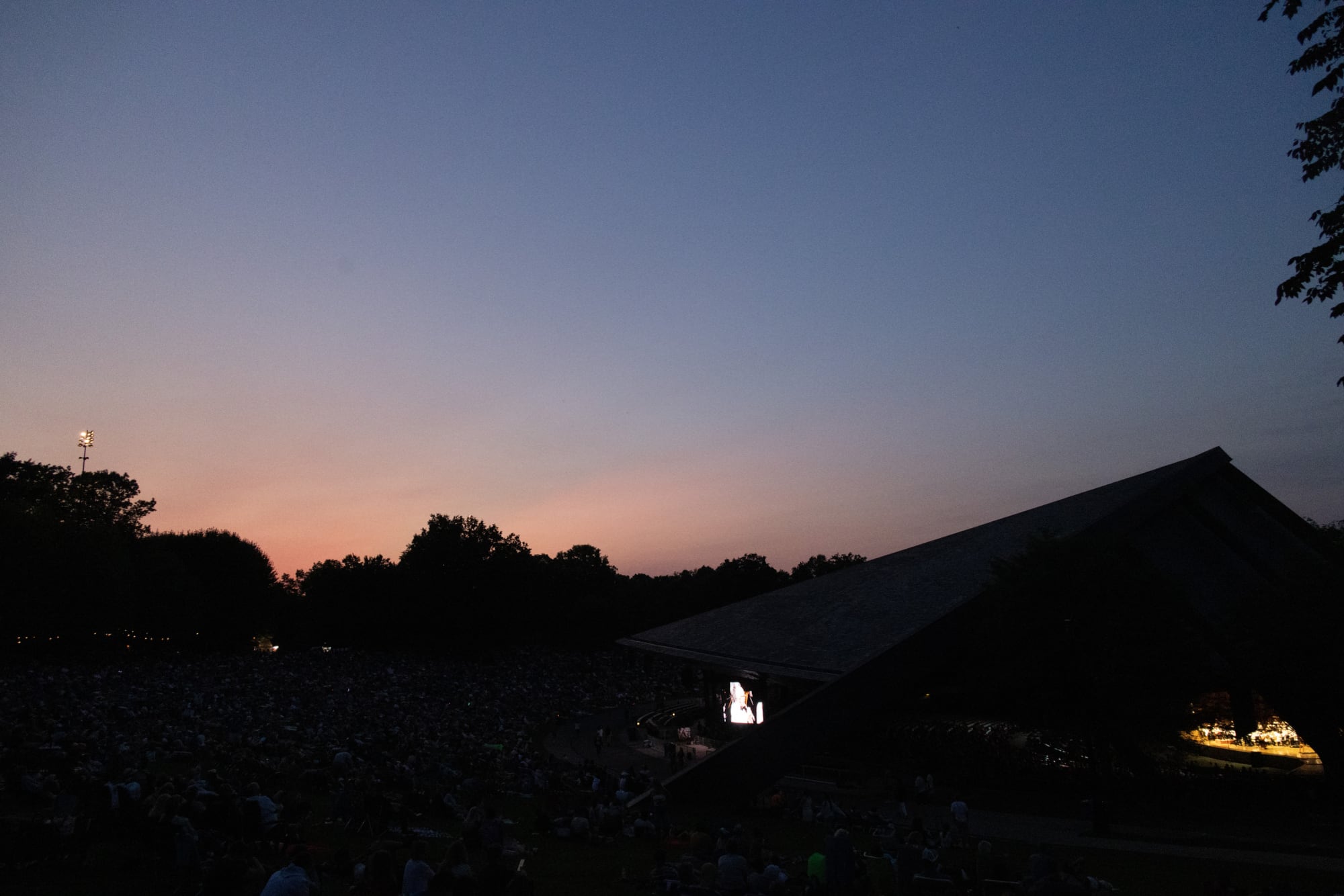
Ohio’s Cuyahoa Falls With the help of cellist Sheku Kanneh-Mason, guest conductor Stephanie Childress, and a program of young pieces by Britten, Saint-Saëns, and Mendelssohn, the Cleveland Orchestra on Saturday sounded much younger than their 107 years.
After making her Orchestra debut in 2024, Franco-British conductor Stephanie Childress returned to the Blossom Music Center on Saturday to a resounding reception. She exuded a remarkable reserve of force from her small physique and deliberate movements. Throughout the evening, her expressive, lengthy fingers, with or without a baton, skillfully and gracefully crafted phrases.
The Simple Symphony by Benjamin Britten is an example of truth in advertising. The adolescent composer transformed songs he had composed as a youngster, primarily for piano, into orchestral attire. Born and reared in London, Childress seems thrilled to share the lighthearted yet cunning song with a North American audience.
You’re winked at by its alliterative movement titles. As if they were kids racing across the Blossom grass, the orchestra, Boisterous Bourr e, Playful Pizzicato, and Frolicsome Finale all snapped, plucked, and scampered. Childress used a delicate touch to sculpt everything, allowing the humor to emerge without being overly dramatic.
She allowed the changes between major and minor to develop gradually in the third movement, Sentimental Saraband, the longest and most solemn of the four, lending the music a tone that is both solemn and gentle.
Camille Saint-Sa ns’s Cello Concerto No. 1, composed at the age of 37, exudes youthful vitality. Instead of starting with a courteous clearing of the throat, the soloist charges into the quarrel, with the orchestra following closely behind.
The score requires strength and agility throughout the course of 20 minutes, which are crammed with three portions that don’t pause. In his 2021 Cleveland debut, British cellist Sheku Kanneh-Mason was warmly welcomed and shown more than just technique. He evoked a tone of exceptional beauty in the lyrical sections, particularly in the lower register.
By matching the soloist’s rhythmic bite with the orchestra’s snappy, spring-loaded answers, Childress maintained the interplay’s tension and intensity. Kanneh-Mason exemplified attentive listening, so focused that his ears appeared to squint.
Music with a passport is Mendelssohn’s Scottish Symphony. While gazing over the remains of Edinburgh’s Holyrood Palace at the age of 20, the composer drew a melancholic theme. He extended those notes into a symphony ten years later, but the sense of discovery is still there: you hear rugged hills and mist, along with the glitter of reels and dances.
Childress encapsulated its drama and Scottishness. The finale stormed across the moors with warrior-like strength, the dance rhythms sparkled, and the somber opening lingered. Mendelssohn had a talent for transforming scenery into music, and at the end, you’ll feel as though you went on the journey with him without ever having to pack a bag.
Conductors have long faced a dilemma as a result of the finale’s exuberant conclusion, which is lauded by some and questioned by others.
Crowning the symphony with brilliant affirmation, it is compared to a male-voice chorus. It was notably rejected by Otto Klemperer, who came at his own harsher conclusion instead. Childress delivered Mendelssohn’s vision with a youthful zeal that made the Blossom audience smile as they went home, really embracing it.
Kevin McLaughlin writes and edits for a living. He just started working as a part-time host for JazzNEO at Ideastream Public Media. You may listen to At the Jazz Band Ball, his weekly podcast about early jazz, on a number of podcast platforms.


