
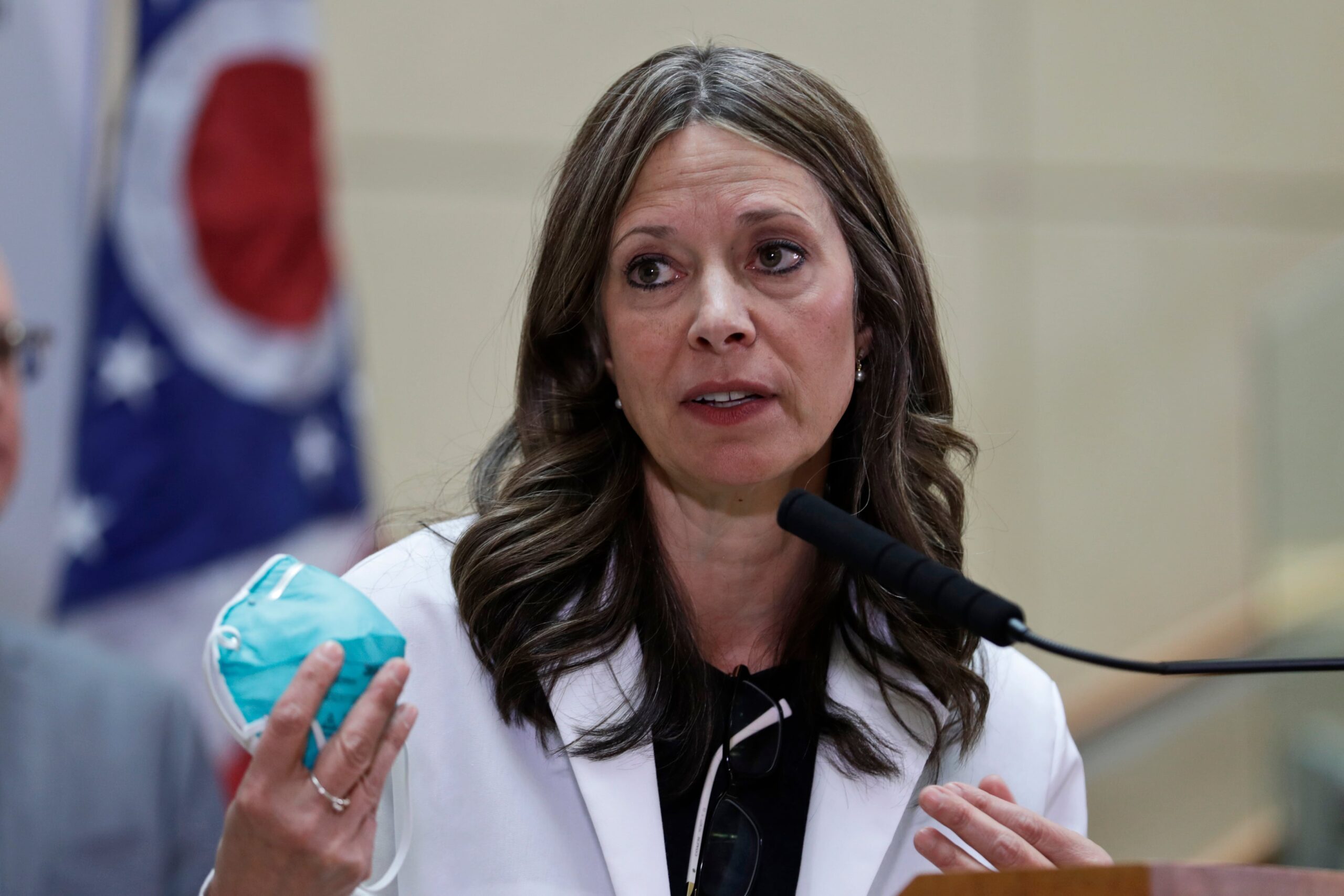
Columbus, Ohio The Ohio gubernatorial campaign of Dr. Amy Acton declared on Wednesday that it has raised a staggering $1.35 million to date, breaking several fundraising records for a Democratic contender.
As Republican gubernatorial contender Vivek Ramaswamy revealed earlier this month that he had raised an incredible $9.7 million since launching his campaign in February, Acton, a former state health director, continues to lag behind in the money race.
But despite doubts about Democrats’ chances of winning and the threat of former US Senator Sherrod Brown entering the race, Acton’s cash haul thus far shows that she can raise the kind of money required to conduct a successful campaign as a first-time political candidate.
In your opinion, how significant will money be in the Ohio governor’s election in 2026?
Acton’s campaign claims that between the start of her campaign in early January and June 30, she received a record $1.25 million in donations. However, as rumors about Brown’s 2026 ambitions grew, Acton only managed to gather roughly $100,000 in July.
According to the statement, the campaign’s 33,000 total donations from over 17,000 donors also broke new marks.
Small donors are crucial to a political campaign because they allow the campaign to reach out to them for more money without worrying about exceeding state political contribution caps, in addition to serving as a sign of broad grassroots support.
Stories by
Jeremy Pelzer
-
Ohio plans massive expansion of truck parking to combat highway crashes
-
What to know about Ohio s expanded 2025 sales tax holiday: Capitol Letter
-
Could an Ohio Democrat s unusual Supreme Court appeal free Larry Householder?: Capitol Letter
In the press release, Acton’s campaign claimed that crucial expenditures in luring online donations will enable her to continue raising the funds required to take on Ramaswamy.
In a statement, Philip Stein, Acton’s campaign manager, said, “We are immensely appreciative of the tremendous amount of support we have received from Ohioans who will not stand by and watch as self-serving billionaires and special interests make life more difficult and costly for working families throughout the state.”
A millionaire from the Columbus region named Ramaswamy hasn’t contributed any of his own funds to the election yet, but he anticipates doing so in the tens of millions.
Acton’s fundraising announcement prompted Ramaswamy’s chief strategist, Jai Chabria, to issue the following two-word statement: That’s adorable.
Acton and Ramaswamy have both boasted about their fundraising successes, but it won’t be until Thursday that important information regarding their campaign finances, including as donor lists, campaign expenditures, and their current cash balances, will be made public. Candidates running at the state level in 2026 have until then to submit their campaign fund reports for the first half of 2025.
Acton’s previous employer, Republican Gov. Mike DeWine, has a term restriction, therefore the Ohio governor’s race is available the next year.
Given Ohio’s recent transformation from the nation’s quintessential swing state to one where Republicans hold nearly complete control over state government, the Democratic nominees for governor and U.S. Senate in 2026, whoever they ultimately are, are likely to face overwhelming odds going into the general election in November of the following year.
As an unproven first-time candidate, Acton still faces a steep uphill road to become governor, according to Tom Sutton, professor emeritus of political science at Baldwin Wallace University.
But according to Sutton, Acton’s fundraising success—particularly from modest donations—is undoubtedly encouraging for larger donors to take notice of her.
Acton’s fundraising success has been aided by the fact that she is running during a time when Democrats are angry about a number of issues, including the beginning of President Donald Trump’s second term in office, Ohio Republicans’ recent actions to lower the state income tax rate for wealthier Ohioans, allocate $600 million from the state for a new stadium for the Cleveland Browns, and pass a contentious higher education law intended to reduce perceived liberal bias on college campuses.
Having minimal competition for Ohio Democrats’ fundraising checks has also helped Acton. Not only is she the sole Democrat in the race for governor, but no Democrats have entered any of the statewide 2026 elections thus far, including the U.S. Senate contest, in which Republican U.S. Sen. Jon Husted is seeking his first federal election since taking office in January.
That’s primarily because Democrats are waiting on Brown, a Democrat from the Columbus region, to decide whether to run for Senate or governor, or whether to stay out of the 2026 election altogether.
However, Acton’s campaign has also been hampered by Brown’s possible entry into the governor’s race, as evidenced by the decline in contributions over the last few weeks.
Acton might choose to run for a different office in the event that Brown chooses to run for governor, however it is yet unclear what that post would be.
Acton may still utilize the funds raised by her gubernatorial campaign if she choose to run in a different state-level election. However, because campaign finance laws forbid moving funds from state-level races to federal elections, she was unable to use that money to run for the U.S. Senate.


